
How Turkey’s Post–Cold War Trajectory Helped Normalize the Far-Right, Modern Autocracies
This path has since offered a striking template for the European populists and the far-right that seems fiercely intent on hollowing out the substance of democracy.

In many respects, the huge vortex of “autocratization” into which Turkey is being dragged must be understood within a broader historical context. That context lies in how its rulers behaved in the post–Cold War period, arguing that the country is eternally sui generis—“unreformable” in terms of Western-style democratization.
As a consequence, Turkey remained both inside and outside its key role as a member of NATO, keeping the gates open to drift “on its own”; thus becoming, over time, unstable and unreliable.
Moreover, over the past decade, the major choices of the Erdoğan regime have served as a source of inspiration for the rise of far-right populists and “wanna-be” autocrats within the Western system—such as Viktor Orbán—and, bizarrely enough, have drawn admiration from the “leader of the free world,” President Donald Trump.
Following the moves to decapitate Turkey’s main opposition party, the CHP, its removed elected leader Özgür Özel touched on this issue, albeit tangentially, in an op-ed for the Newsweek.
Özel argued the following:
“Turkey’s democratic crisis has evolved into something much larger. It is now becoming a security crisis with implications far beyond our borders. What is unfolding in Turkey today should concern not only those who care about democracy, but also those who care about the long-term stability of Europe, NATO, the Black Sea region, the Eastern Mediterranean, and the Middle East.
The reason is simple: Turkey is too strategically important to become politically unstable.
If current trends continue, Turkey risks becoming something unprecedented in NATO’s history: a strategically indispensable member that no longer functions as a democracy, while millions of its citizens grow increasingly dissatisfied with a political and economic order they have no peaceful democratic means to change. This would not merely be a domestic crisis. It would be a profound security challenge.
The outcome could establish a precedent with consequences far beyond our borders, encouraging either democratic renewal or further authoritarian consolidation across a region already under immense strain.”
I have long reflected on the root causes behind why Turkey, about a dozen years ago, abandoned its quest for EU membership—and not only reverted to its origins as an authoritarian state, but has now gone further down, evolving into what can be described as a “closed autocracy,” reminiscent of Azerbaijani or even Belarusian models.
I recently heard an astute analysis that overlapped with my own reflections in an interview with Steven Cook —senior fellow at the Council of Foreign Relations in Washington DC— whom I consider one of the sharpest and most forthright observers of Turkey and the Middle East.
Cook argued the following:
“When NATO was founded in the early 1950s, there was no specific mention in its founding articles about democracy. Turkey and Greece joined in 1952, and when the founders looked at Turkey, they regarded Turks as ‘secularists,’ meaning ‘democrats,’ which we know was not the case. But they were anti-communists, and there was no real consideration of the form of government. It was simply assumed that this was a Western democratic alliance defending against a non-democratic communist bloc.
Then, after the fall of the Soviet Union, when all the Warsaw Pact members wanted to join, new provisions about democracy, freedom, and the rule of law were introduced.
But these did not apply retroactively to existing members; they were designed for new entrants. There was no mechanism to expel any member of NATO, even if it was non-democratic, like Turkey. That was the broader picture—how NATO was founded and what assumptions underpinned it at the time.”
These are the points often missed by the pundits inside Turkey.
For many of them, it is all about Erdoğan. Erdoğan here, Erdoğan there… Is it? When Erdoğan leaves the stage, will anything change — considering the massive regime shift since 2017?
Personal rule, populist majoritarianism, institutional hollowing… It is tempting to explain Turkey’s present authoritarian consolidation through the familiar vocabulary of “Erdoğanism”(!) A hugely misleading term, because it presumes that the current “system” is all about Erdoğan. It is not: Erdoğan is only “ecumenical” in it.
The root causes of Turkey’s systemic crisis lie in a longer trajectory—one in which democratization was persistently deferred, and in which external alliances reduced the cost of that deferral.
NATO sits uncomfortably at the center of this story.
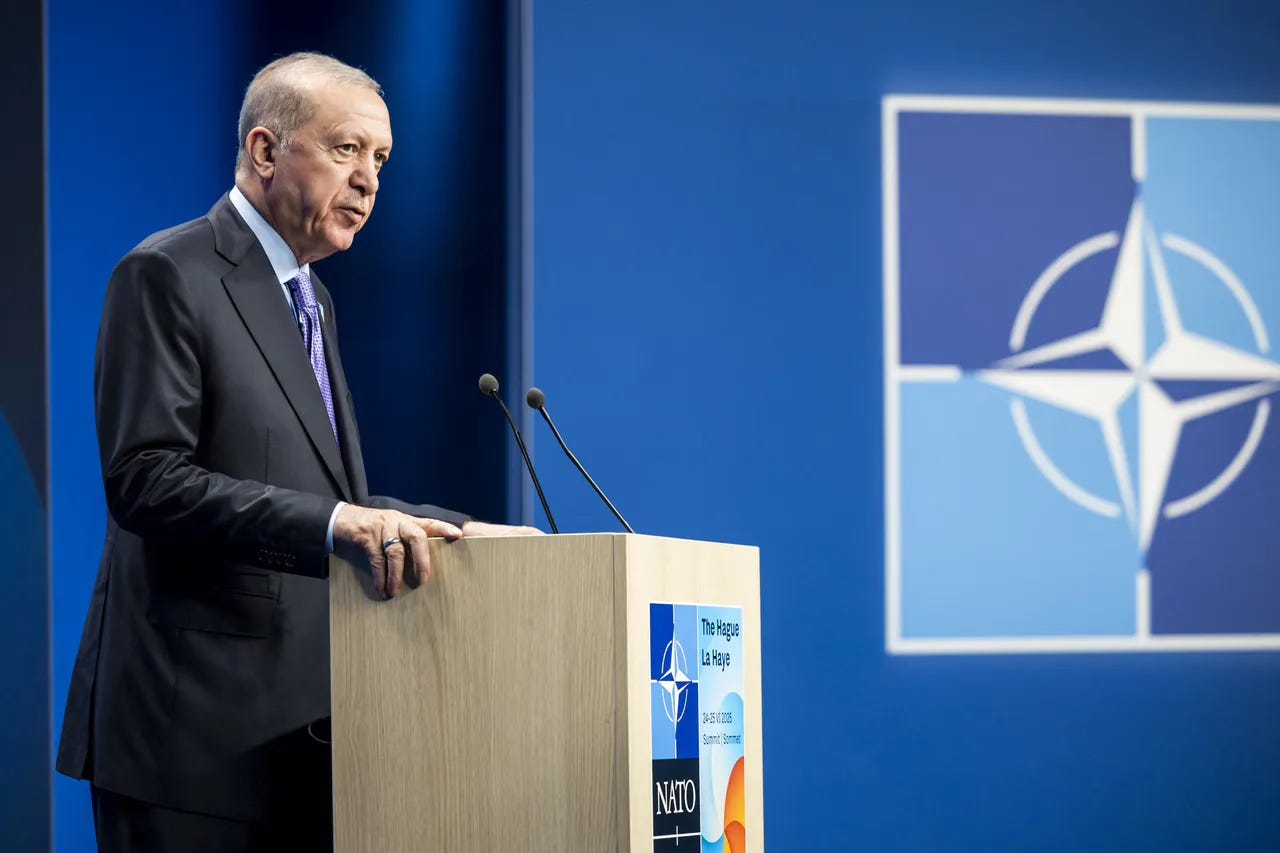
From the early Cold War onward, Turkey’s geostrategic indispensability translated into political indulgence. As the alliance’s southeastern anchor, bordering the Soviet sphere and projecting into the Middle East, Turkey became too valuable to fail—and, crucially, too valuable to discipline.
The implicit bargain held: strategic loyalty in exchange for tolerance of internal shortcomings.
This bargain did more than protect Turkey; it shaped it.
NATO’s sustained military cooperation and political backing reinforced the Turkish armed forces as a dominant, self-assured ruling class. Over time, the military did not simply intervene in politics—it structured the limits of politics itself. Acting as a tutelary force, it drew red lines around ideology, identity and dissent, systematically constraining pluralism, particularly on the left and among Kurdish political movements.
The coups of 1960, 1971, and especially 1980 were not deviations but mechanisms of control. The 1980 intervention, with its mass repression, destruction of political life, and sweeping human rights violations, was met with striking restraint by NATO allies.
Even more consequential was the acceptance of the 1982 constitution, which codified a restricted democracy under military oversight. A system designed to contain society, not represent it, was also normalized within the Western alliance.
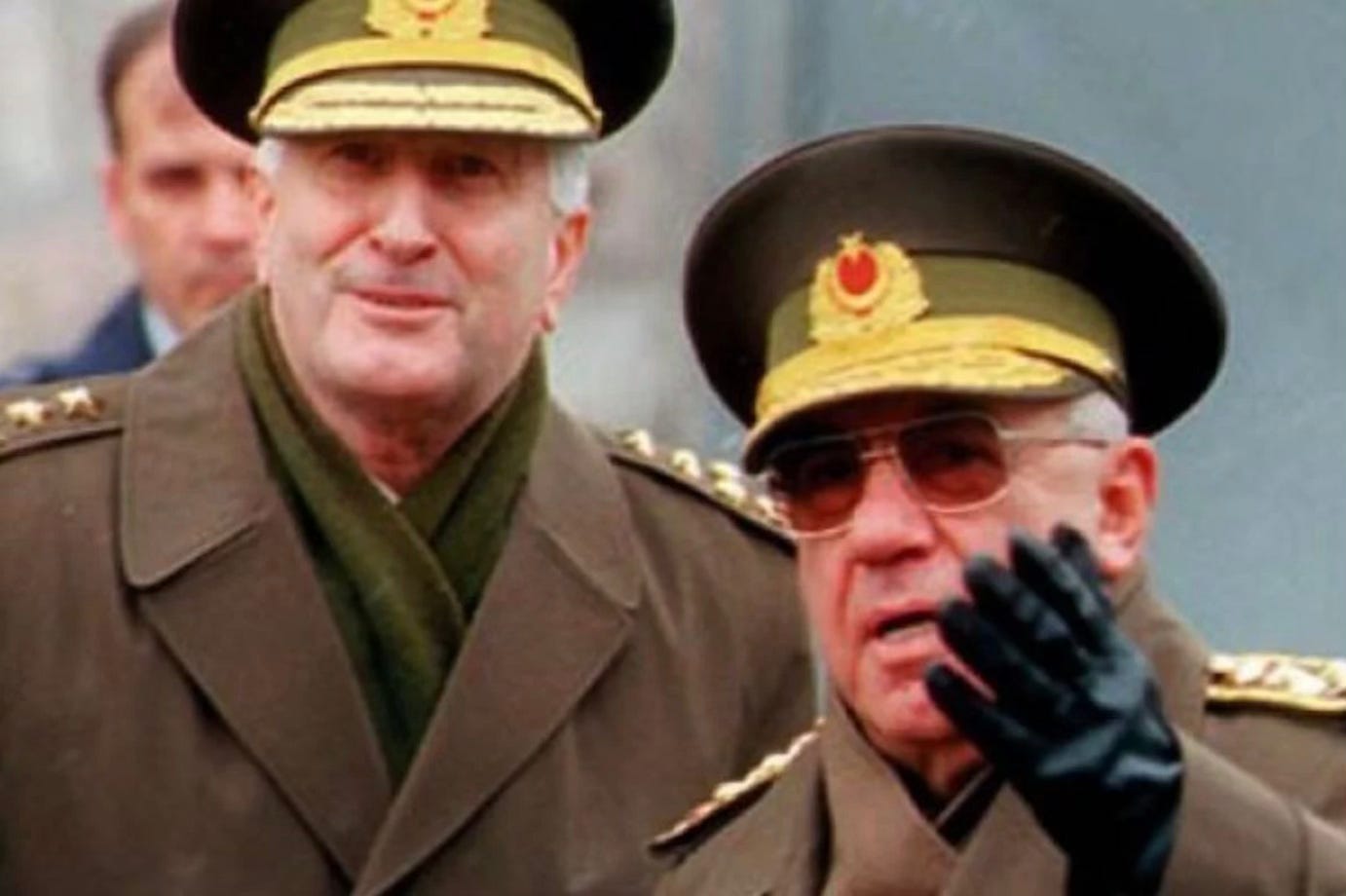
The end of the Cold War might have marked a rupture, many hoped. Turkey’s record with its “inner guardian core”, referred as a “deep state” was intact. Gladio formations in Italy, Greece etc were dismantled. The time had finally come for Ankara to pull its act together.
It did not.
Instead, Turkey’s military elite adapted by resisting the very global transformations reshaping other NATO peripheries. Their message was explicit and consistent:
Turkey’s conditions were “exceptional,” its security challenges unique, its political structure not subject to external prescriptions.
In effect: do not expect anything, do not touch us, do not force us, let us remain as we are.
This insistence carried through the 1990s.
Despite the global wave of democratization, Turkey’s political field remained tightly controlled. State-sponsored violence escalated in response to the PKK uprising. Extrajudicial killings, enforced disappearances, and systematic abuses became structural features rather than aberrations.
Kurdish demands for collective rights were denied. Freedom of expression was curtailed through relentless prosecutions, media outlets faced sustained pressure, and political competition often functioned as little more than managed pluralism.
Yet these patterns were largely subordinated, in Western eyes, to geopolitical considerations.
Turkey remained a strategic asset—now in a post-Soviet landscape marked by instability in the Balkans, the Caucasus, and the Middle East. Once again, democratic deficiencies were acknowledged, but not prioritized. The result was a continuation of the same asymmetry: electoral politics without full democratic substance.
This distorted environment produced its own political consequences.
The secular center-right, long a pillar of the system, became increasingly hollowed out—its legitimacy eroded by corruption, its autonomy constrained by military tutelage, its ideological coherence weakened.
In this vacuum, an alternative political force began to consolidate: a disciplined Islamist movement —whose hidden agenda proved to be resilient— that would eventually take institutional form as the AKP. Erdoğan’s rise must be understood within this context—but so must his transformation.
A keen observer of the international system, Erdoğan initially leveraged Western expectations to weaken military tutelage, presenting himself as a reformer aligned with European norms. But he also grasped something more structural: that the West’s commitment to democracy in Turkey had always been conditional, selective, and ultimately secondary to strategic concerns.
When he pivoted toward authoritarian consolidation, he did so within a permissive environment.
Crucially, this shift was not carried out alone. Segments of the old state—nationalist bureaucratic and security elites, many of them historically skeptical of the West—aligned with Erdoğan from 2015 elections on, in dismantling what remained of Turkey’s fragile semi-democratic order.
The methods were familiar in logic if not in form: capturing media, boosting polarisation, waging a Kulturkampf, subordinating the judiciary, demonisation and incarceration of dissidents, neutralising the opposition, and now, redefining the boundaries of legitimate politics.
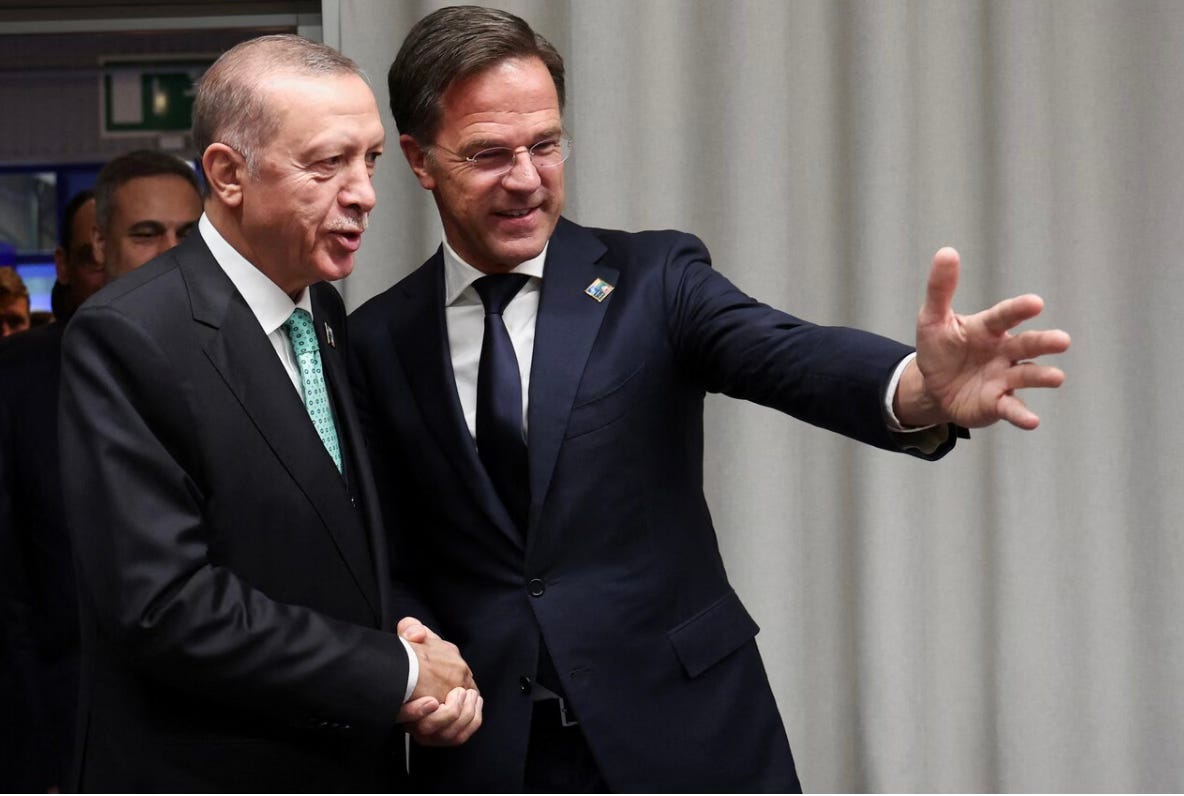
And once again, the reaction from NATO was measured, cautious, and ultimately limited. And the EU had for long lost leverage; it had been lost in a reverse transition.
Here the historical continuity becomes strong. Just as Cold War Turkey’s authoritarian reflexes were accommodated in the name of stability, Erdoğan’s Turkey has been treated through a similar lens—criticized, but rarely confronted in ways that would alter the underlying trajectory. Strategic imperatives, from migration management to regional security, continue to outweigh democratic concerns.
Each time he took a step forward, Erdoğan saw his moves confirmed.
But this is not only Turkey’s story anymore.
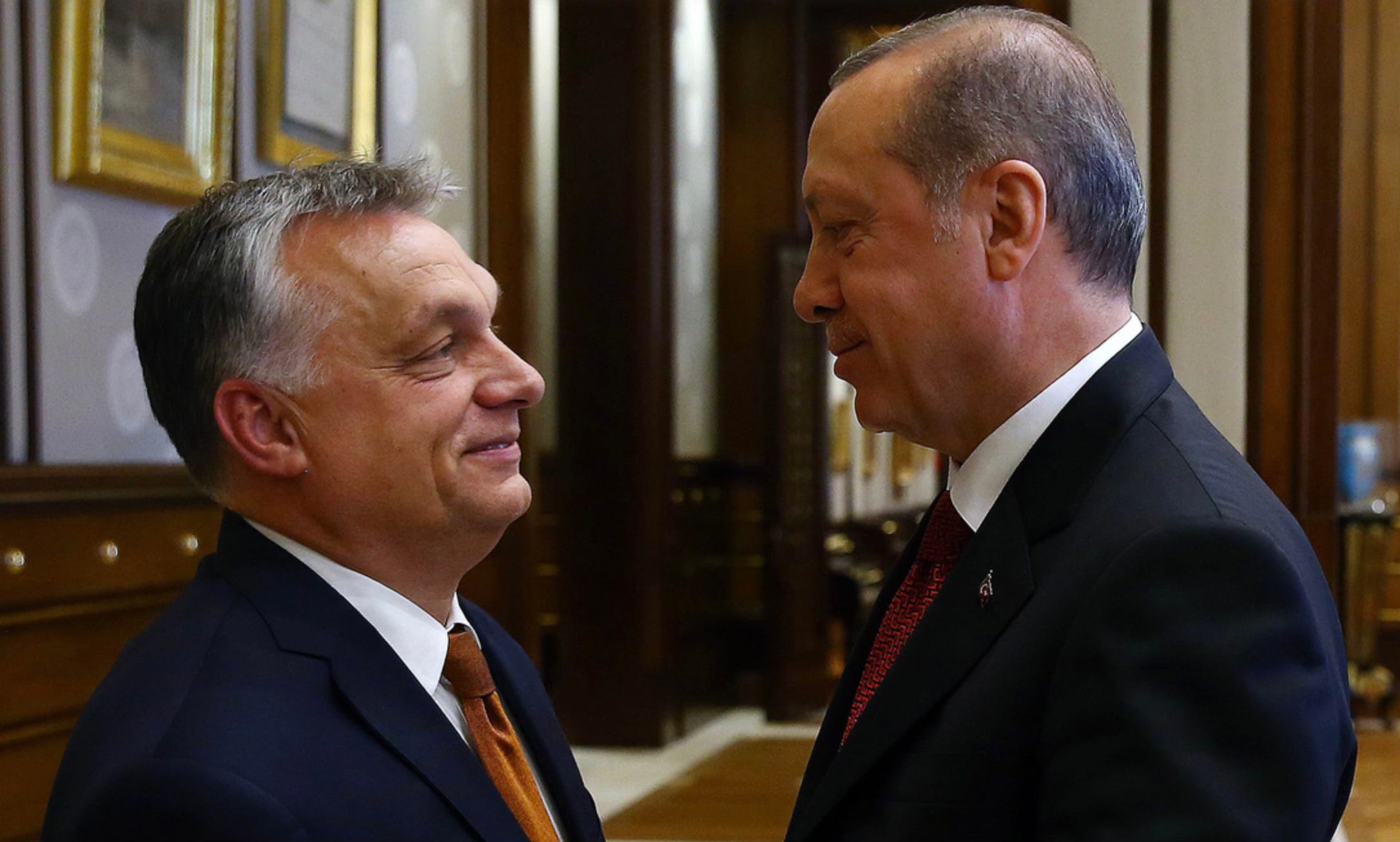
Erdoğan’s model —enhanced authoritarianism built on the erosion of checks and balances and the rule of law— has resonated beyond Turkey’s borders. Within NATO itself, Viktor Orbán’s Hungary has drawn clear lessons, adapting elements of this playbook to its own context. The alliance, once again, has struggled to respond decisively to democratic backsliding within its ranks. Thanks to the EU dynamic, Orban was cast out of the dark game.
The risk of contagion, however, is there.
If Turkey’s current trajectory continues to be observed with the same strategic tolerance that characterized earlier decades, its model may further normalize a form of governance that empties democracy from within while preserving its outward shell. What was once justified as Cold War necessity risks becoming a precedent for the present.
This is, in essence, the warning now emerging —however belatedly— from within the main opposition. Özel’s recent framing points to a realization long deferred: that the country’s democratic erosion cannot be understood solely as an internal deviation, but must also be read in light of an external system that repeatedly deprioritized democratic substance.
Turkey’s crisis is not an isolated anomaly but the outcome of a decades-long equilibrium between domestic constraints and international permissiveness. Its system stands as a role model.
And unless that equilibrium is broken, the trajectory it has produced may prove not only durable—but replicable.
Regardless of how you subscribe, I thank you for reading.
A must read article to better understand Turkey’s political climate. Thanks Yavuz.