
Explainer / What Will Trump’s “Giftbag” Contain for Erdoğan? F35s or Less?
Can Trump bypass Congress to deliver to Ankara? Unlike past maneuvers for Gulf arms sales, U.S. laws block executive overrides. Six scenarios for navigating the gridlock.

Ahead of a NATO Summit in Ankara, Trump has—in a joint press conference with NATO Secretary General Mark Rutte in the White House—publicly hinted at bringing a “gift bag” of F‑35s and F‑110 jet engines for Erdoğan, portraying himself as willing to “make Erdoğan very happy” if legal requirements can be met.
Vice President J.D. Vance, added that Trump asked his team to “run the traps” on the legal certifications needed, but he emphasized that “this is really a congressional thing,” implicitly acknowledging that statutory barriers exist.
So, what is cooking? What could the “gift bag” contain, and what will it lack? The instant question Trump’s statement brings to mind is whether or not he could use his executive power—as he did in the arms package sales to the UAE and the Gulf states—to somewhat bypass the ever-hesitant Congress.
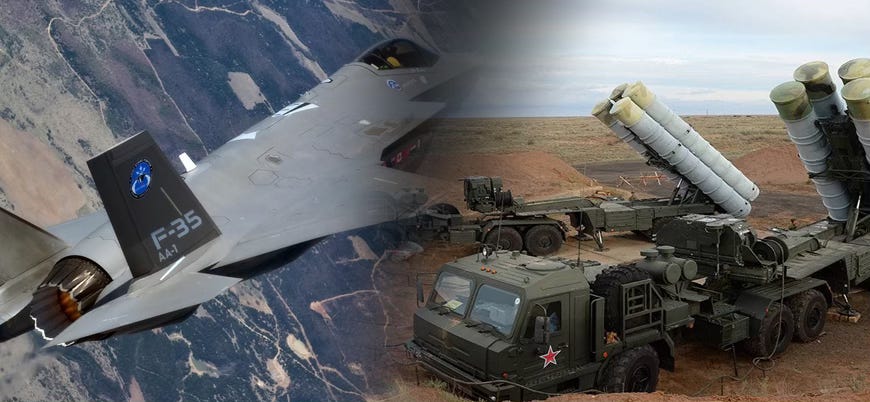
Allow me to share some analysis—based on open sources—and a few scenarios regarding the complex relationship that has kept the U.S.–Turkey–NATO triangle in limbo for nearly a decade, explained in plain English.
Turkey was formally removed from the F‑35 Joint Strike Fighter program in 2019 after purchasing the Russian S‑400 air‑defense system. (This was the result of a fierce implusive act by Ankara, driven by Erdoğan’s perception that the shadow of “the West” lay behind the botched 2016 coup.)
The removal, regardless, occurred because U.S. officials judged the S‑400 to be a threat to the F‑35’s stealth secrets.
In December 2020, the U.S. sanctioned Turkey’s defense procurement agency, SSB, under CAATSA (the “Countering America’s Adversaries Through Sanctions Act”) for the S‑400 purchase. The sanctions included a ban on export licenses to SSB and asset and visa restrictions on its leadership.
The National Defense Authorization Act (NDAA) then drew a very hard legal line: Its Section 1245 prohibits the transfer of F‑35 aircraft, parts, technical data, and support to Turkey unless the Secretaries of State and Defense certify in writing that Turkey “no longer possesses” the S‑400 and has given credible assurances it will not acquire similar Russian systems again.
This NDAA restriction is mandatory: without the certification that the S‑400 is gone, the White House lacks the legal authority to send the jets, even if the President personally wants to.
Think‑tank and congressional voices have responded by reminding everyone that current law flatly bars F‑35 transfers to Turkey as long as the S‑400 is present in the picture, warning Congress not to allow any backdoor erosion of this red line.
Until now, President Erdoğan has staunchly refused to comply, preferring a long-distance tightrope walk between Washington and Moscow.
So, back to the question: would Trump be able to resort to his executive power to fill the “gift bag”?
This is where the trickiest part starts. Let us remember what happened in the past. In 2019, Trump’s State Department used the Arms Export Control Act (AECA) emergency clause to push through roughly $8.1 billion in arms sales to Saudi Arabia and the UAE, citing Iranian threats to declare an “emergency” and bypass the usual prior congressional review.
Congress responded with multiple resolutions of disapproval against these Gulf arms packages, but Trump vetoed them, and the votes to override his veto fell short—so the sales went ahead despite significant bipartisan opposition.
Later, as part of the Abraham Accords, the administration notified Congress of a proposed sale of advanced armed drones and F‑35s to the UAE. There, too, Senate attempts to block the F‑35 and drone deal failed, leaving the administration’s plan intact.
The key point in the whole affair is this: in the Saudi/UAE cases, Trump exploited AECA emergency powers and the presidential veto, but he was operating within a legal framework that still allowed arms sales if Congress could not muster a two‑thirds override, rather than defying a specific statutory ban like the one NDAA Section 1245 imposes on Turkey.
What are, then, Trump’s formal tools without new legislation?
Under the Arms Export Control Act (AECA), the President can:
Notify Congress of a proposed major arms sale and proceed if Congress does not pass a resolution of disapproval within the statutory period.
Declare an “emergency” to shorten or bypass the usual waiting period, as the State Department did for Saudi Arabia and the UAE in 2019, then veto any subsequent resolutions of disapproval and rely on Congress failing to override.
However, the AECA does “not” let him override an explicit ban written into other statutes. It governs only “procedure”, not the core eligibility rules Congress has since set for Turkey and the F‑35.
CAATSA compels sanctions for significant transactions with Russia’s defense sector but contains waiver or delay mechanisms if the President certifies that waiving sanctions is in the U.S. national security interest and reports to Congress.
Ever willing to be helpful to his “dear friend” Erdoğan, Trump used delay tactics before sanctions were finally imposed on Turkey in December 2020. However, once the CAATSA sanctions and the NDAA were in force, the F‑35 exclusion was legally reinforced. Waiving CAATSA alone would not automatically reopen the F‑35 pipeline.
The only direct legal path under current law is for State and Defense to certify that Turkey no longer possesses the S‑400 and, on top of that, will not reacquire similar Russian systems. While there is some room for the White House interpretation of what “possesses” means, that interpretation would be heavily scrutinized by Congress — and the courts.
In practice, Trump can lean on lawyers to explore narrow interpretations (for example, if the S‑400 is dismantled, removed from Turkish territory, or placed under U.S. custody), but any certification that looks like a legal fiction would invite lawsuits, congressional holds, and new legislative blocks.
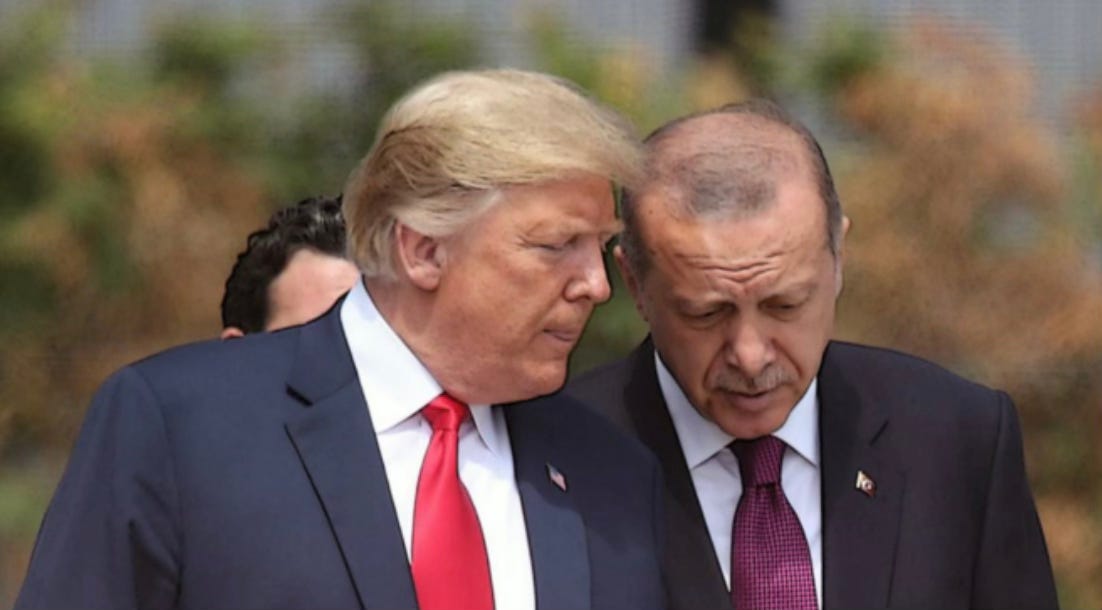
For both leaders, time is of the essence. Erdoğan wants to secure a resurgence of his popularity as he engineers the political stage for a new presidential term in the elections next year or in early 2028. He sees his forged alliance with Trump as a primary asset for his further ambitions to cement a waterproof autocracy.
For Trump, a foreign policy success story in the Middle East is crucial before the midterms. For both leaders, November seems to be a soft deadline to complete action. If Trump loses control of the House, progress on the issue will face a steep uphill path.
Currently, there are six scenarios.
Scenario 1: “Clean compliance” – Turkey divests the S‑400
Trump may use his leverage and promise of jets to push Erdoğan to:
Remove the S‑400 from Turkish territory—return it to Russia, transfer it to a third country, or dismantle it under verifiable U.S./NATO monitoring.
Sign binding assurances not to buy Russian systems that could threaten F‑35 secrets in the future (and move toward a U.S. or NATO‑compatible air defense solution, e.g., the Patriot system).
Once that is done, State and Defense could credibly certify compliance, CAATSA sanctions on SSB could be lifted or waived, and the administration could re‑notify F‑35 transfers to Turkey, daring Congress to pass—and override—resolutions of disapproval.
This scenario would probably still face stiff bipartisan resistance, but the legal foundation would be solid: the statutory precondition (no S‑400s) would be met, so the contest would shift back to ordinary arms‑sales politics, back to business as usual.
Scenario 2: “Creative” certification, while S‑400 is sidelined
A more aggressive legal strategy would be to claim that Turkey “no longer possesses” the S‑400 in a functional sense, even if the hardware remains physically in-country. The system could be placed in sealed storage under U.S./NATO supervision, completely disconnected from any Turkish or NATO air‑defense network. Furthermore, sensitive radar and software components would be removed or transferred, with Turkey pledging not to activate the system again.
Trump’s team could argue that such a configuration meets statutory intent and use that to justify certification, then move to restart F‑35 transfers.
But the language in the NDAA (“no longer possesses the S‑400”) is quite strict, and hawkish members in both parties would likely challenge any “creative” interpretation as contrary to Congress’s intent, responding with new explicit bans, holds, or litigation.
Politically, this scenario risks a clash not only with Democrats, but also with Republicans who have previously backed the F‑35 red line on Turkey, potentially fracturing Trump’s own coalition in the Senate.
Scenario 3: Trying to bypass Congress
Trump could try to “recycle” his Gulf precedent:
Use AECA emergency authorities to fast‑track a Turkey package or to move jets to another country (e.g., a NATO ally) that would then cooperate with Turkey, portraying this as urgent for deterrence against Russia or Iran.
Veto any disapproval resolutions and rely on Senate Republicans plus some Democrats to prevent a two‑thirds override, as happened with the Saudi and UAE sales.
The problem here is that any scheme designed to filter jets indirectly to Ankara would be seen as an attempt to nullify Congress’s law. Congressional committees already use holds to block F‑35 deliveries even to Turkey‑friendly arrangements, and senior Republicans have kept a strong hold on any F‑35 movement to Turkey despite Erdoğan’s intense lobbying.
Scenario 4: Everything but the F‑35
Trump can much more easily deliver a package that stops short of actual F‑35 jets.
F‑110 engines and other components already in U.S. warehouses or destined for allied fleets.
Additional F‑16 Block aircraft, modernization kits, munitions, and other support already under discussion or approved for Turkey.
These items are subject to CAATSA considerations but are not covered by the specific F‑35 statutory ban. Trump can use emergency notifications and vetoes to facilitate them over congressional objections, just as he did for Saudi Arabia and the UAE.
Such a partial “gift bag” allows Trump to claim he is repairing relations and strengthening NATO’s southern flank, tiding things over until the S‑400 issue is formally resolved.
So far, this is scenario that is linked to the “gift bag”.
Scenario 5: “Negotiated” legislative change
The administration could bargain with congressional leaders to amend or repeal NDAA Section 1245, trading concessions (tighter reporting requirements, limits on Turkish basing or technology access, or parallel sanctions on Russia) for a conditional reopening of F‑35 transfers. This might be packaged within a broader NATO or Ukraine‑related bill, or tied to a larger bargain on Middle East policy, echoing how the UAE F‑35 deal was embedded in the Abraham Accords framework.
Given the strong record of bipartisan criticism of Turkey, such a change would be a political uphill battle. However, Trump could try to frame it as necessary to keep Turkey anchored in NATO—and away from Russia and Iran.
If the legislation changes, Trump’s executive tools—AECA emergency powers, vetoes, and CAATSA waivers—could then operate in a more permissive environment, making a future F‑35 transfer legally viable.
Scenario 6: Strategic linkage and “gradualism”
Finally, Trump could treat the F‑35 issue as part of a wider “grand bargain”:
Use the promise of jets and engines as leverage for Turkish cooperation on issues like Black Sea access, Syria, or Iran sanctions, while moving step‑by-step: first F‑16 upgrades and engines, then industrial participation, and only much later the aircraft themselves.
With each step, push Ankara closer to Western air‑defense standards and away from operational use of the S‑400, preparing the ground for eventual certification that the system is effectively gone or irrelevant.
This “gradualist” approach does not in itself solve the legal problem, but it buys time. It lets Trump show Erdoğan tangible benefits short of F‑35s while giving Congress multiple chokepoints to react if it believes the S‑400 red line is being eroded.
So, in conclusion, this much can be said: compared with the UAE case—where Trump used AECA emergency powers and vetoes to push arms deals through a hostile Congress—the Turkey/F‑35 problem is constrained by a specific statutory prohibition that ties F‑35 transfers to the fate of the S‑400, making a pure “executive bypass” much harder.
In addition to the race against time, there is also the messy issue of the Eastern Mediterranean. Turkey’s “Blue Homeland” doctrine and its consequential moves—along with offensive, irredentist rhetoric regarding some Aegean islands—has greatly irked Athens —another NATO ally— leading to a military buildup and new alliance formations against Ankara. In this context, Greece will definitely continue to insist on setting strict guarantees against hostile, ally-to-ally actions. Israel, currently in a massive geopolitical feud with Turkey, will not stand idly by in the diplomatic tug of war.
Trump’s realistic playbook for a NATO “gift bag” therefore revolves around: inducing some form of S‑400 divestment or deactivation; pursuing creative but risky legal certifications; offering partial compensation via F‑16s, engines, and other systems; pushing Ankara strictly to behave in line with NATO strategies; and, in the longer‑term, reshaping the law with Congress rather than simply vaulting over it.
(Sources: Congress, State Department, Reuters, CBS, ABC, AP)
Regardless of how you subscribe, I thank you for reading.
Çok güzel şeyler yazıyorsun. İnanılmaz derecede akıcılık var. Gurur duyuyorum seninle.