
Explainer/ Turkey’s Democratic Endgame: President Erdoğan Closes the Circuit
Turkey’s main opposition is delivered a severe blow, facing a dramatic division within, an irreversible split. Erdoğan’s self-coup has taken a huge leap towards darkness.

In a landmark and profoundly consequential ruling delivered today, on May 21, 2026, the Ankara appeals court annulled the results of the CHP’s 38th Congress, held on November 4–5, 2023, voiding the election of Özgür Özel as chairman of Turkey’s main opposition Republican People’s Party (CHP). The ruling also nullifies all the party decisions taken under Özel’s leadership since then.
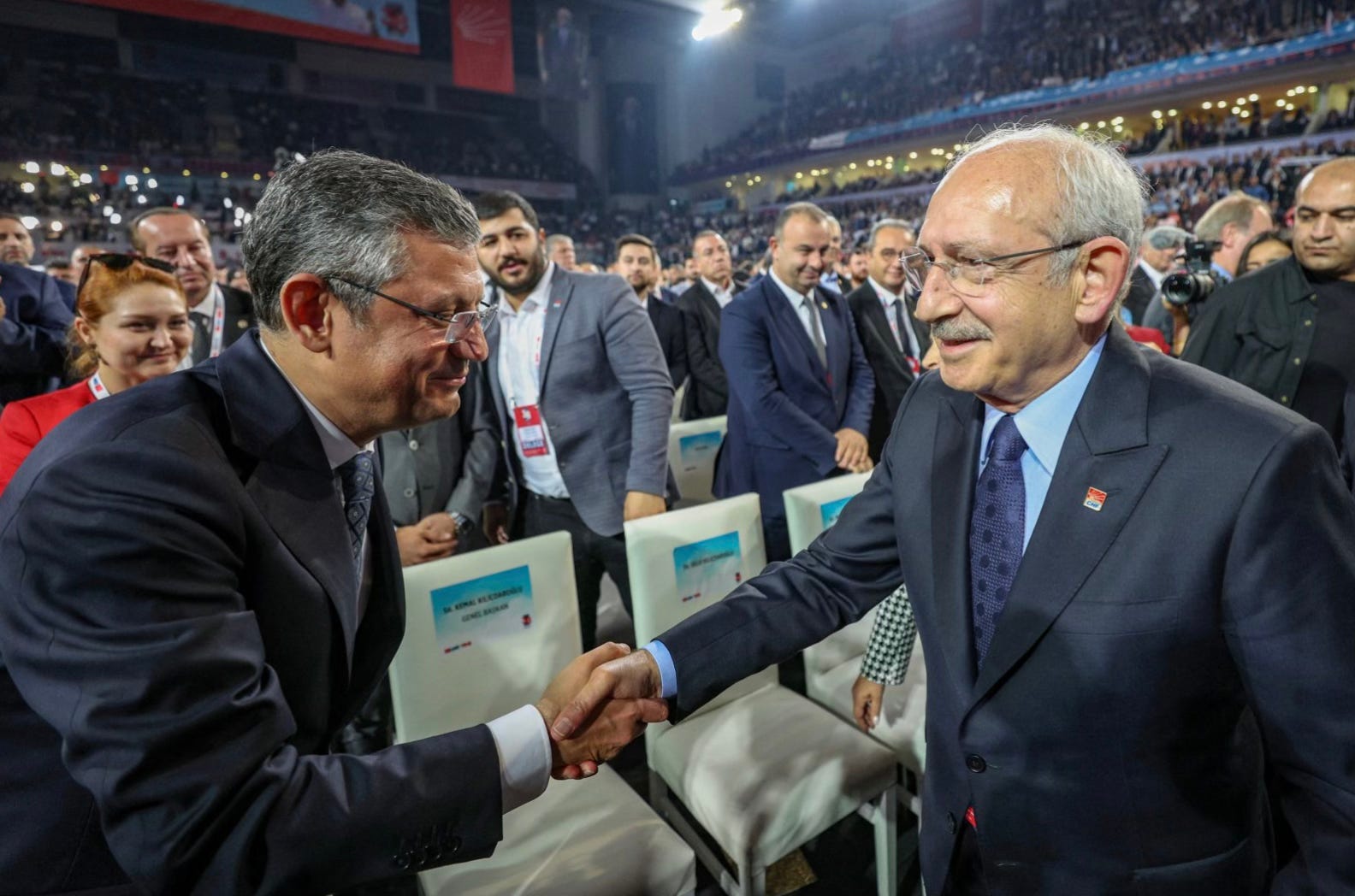
The decision triggers Özel’s removal from the party leadership he has held since defeating longtime chairman Kemal Kılıçdaroğlu at that congress.
Markets responded immediately: the Istanbul stock exchange registered a sharp selloff, continuing a pattern of financial shock that has accompanied each successive judicial blow against the CHP.
The background to today’s ruling is a methodical, staged, deliberate legal campaign. In September 2025, a court annulled the CHP’s Istanbul provincial congress, removed Istanbul chair Özgür Çelik and 195 other officials, and installed an interim caretaker committee — causing Turkey’s BIST100 to drop more than 5%. That ruling was widely read at the time as a test run and a signal of what was coming for the national stage.
A parallel case targeting the 2023 national congress, on grounds of alleged vote-buying and procedural misconduct, had been adjourned repeatedly under enormous public pressure before finally being dismissed at first instance in October 2025 — a moment of short-lived relief — on the grounds that the CHP’s extraordinary congress of September 21, 2025, which had preemptively re-elected Özel, had rendered the case “moot.”
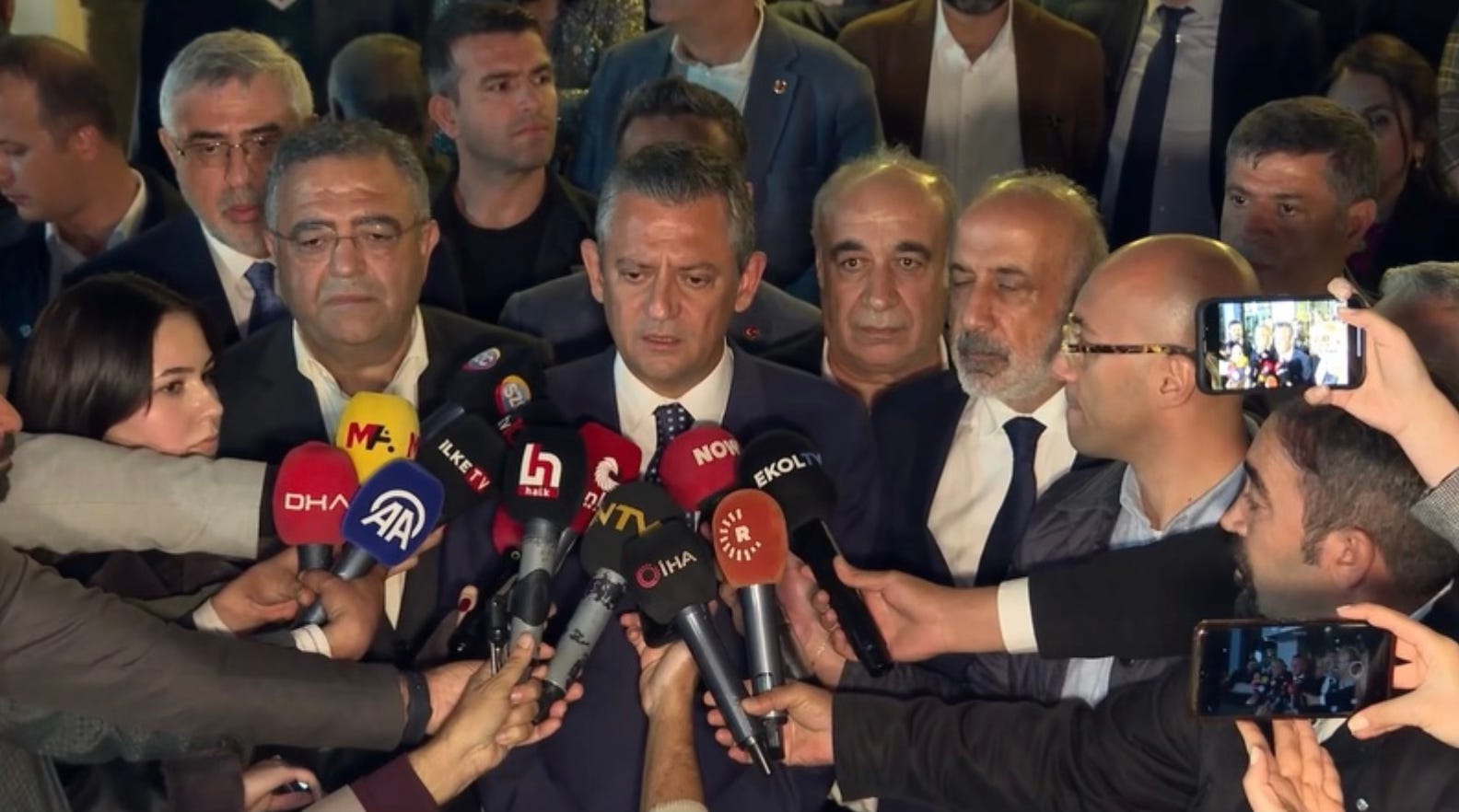
Today’s appeals court ruling reverses that decision entirely, reinstating the annulment and removing the safeguard the CHP had tried to build for itself. The legal basis is the allegation of procedural violations and vote-buying at the November 2023 congress — claims the CHP has consistently and categorically rejected as politically fabricated.
Crucially, legal experts had long pointed out that under Turkey’s own constitution, only the Supreme Electoral Council — not the civil courts — holds jurisdiction over internal party elections; the council had already validated Özel’s election. That constitutional argument has now been swept aside.
This Is No Longer a Crisis of Democracy — It Is Its Demolition
What we are witnessing in Turkey today is not democracy under stress — it is democracy’s deliberate, calculated demolition, carried out in plain sight and dressed in the language of procedure and legality.
Call it what it is: the completion of a self-coup. Not the dramatic, overnight seizure of power that history usually associates with the word, but something more insidious — a slow-motion constitutional strangulation, engineered through captured courts, hollowed institutions, and the weaponization of legality itself against the rule of law.
When courts remove opposition leaders whom polls show would defeat Erdoğan’s AKP in a free election, the pretence is over.
The implications are structural and, in the short term, irreversible.
Here is how I see it:
Judicial capture is now total. The appeals court’s reversal of a lower court’s own dismissal — issued specifically because the CHP had held a new congress to protect itself — signals that no procedural safeguard the opposition constructs will be permitted to stand. The courts are not interpreting law; they are executing political instructions.
Electoral competition is being criminalised by proxy. With İmamoğlu imprisoned and stripped of his university degree, blocking his presidential candidacy, and Özel now judicially removed from the chairmanship, the regime has effectively decapitated the opposition’s entire leadership tier at once.
Parliament is being reduced to decoration. A legislature whose largest opposition party can have its elected leadership annulled by a civil court acting beyond its constitutional remit is not a parliament — it is a managed performance.
The constitution itself is being selectively voided. When courts exceed the jurisdictional limits set by the constitution — limits that explicitly reserve party-election oversight for the Supreme Electoral Council — and suffer no institutional consequence, the constitution ceases to function as a constraint on power.
What makes this moment uniquely dangerous is that it has been preceded by a masterclass in opposition neutralisation — and the regime deserves grim credit for its tactical precision.
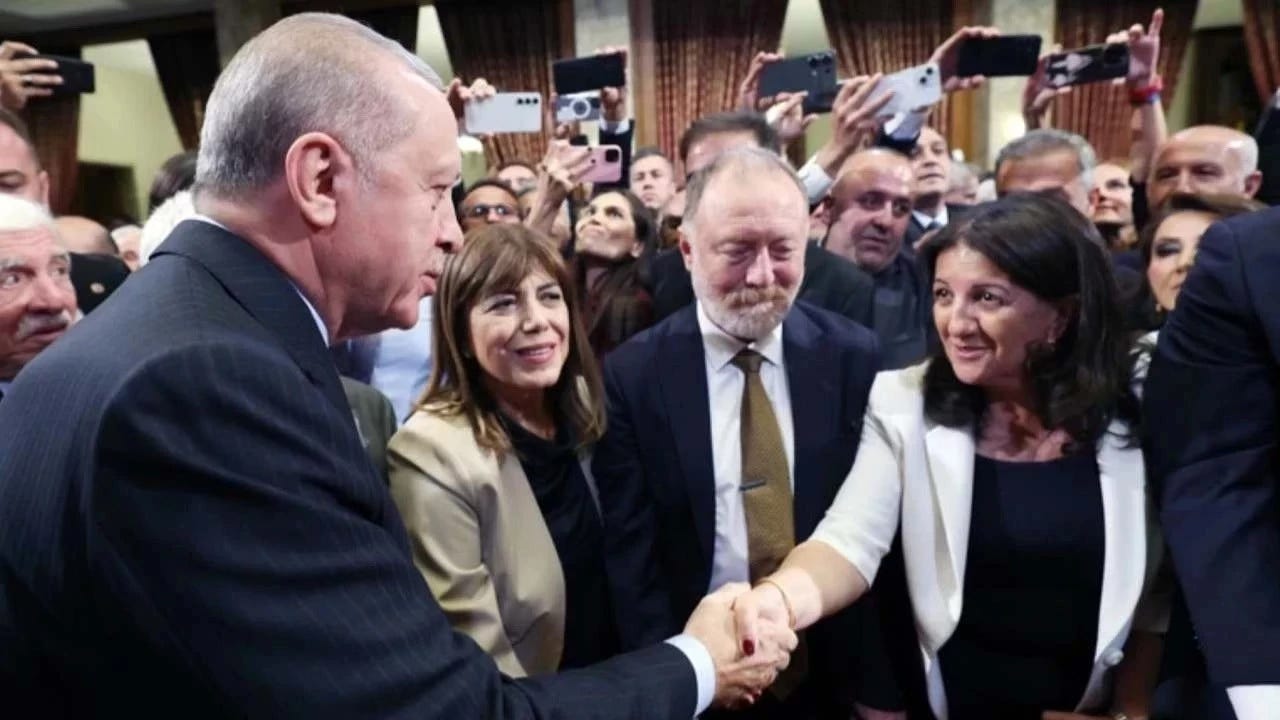
The DEM Party, representing Turkey’s Kurdish political movement, has been drawn into a deliberately opaque “peace process” built around Abdullah Öcalan, jailed leader of the PKK. The bait was irresistible: after decades of armed conflict and political persecution, the promise of peace carries enormous moral weight for Kurdish communities.
But the architecture of this process has been entirely regime-controlled — no independent verification, no transparent roadmap, no international monitoring. Öcalan’s statements, delivered from the total isolation of İmralı Island, have been instrumentalised to give the regime a veneer of statesmanship while neutralising DEM as a vehicle of democratic opposition.
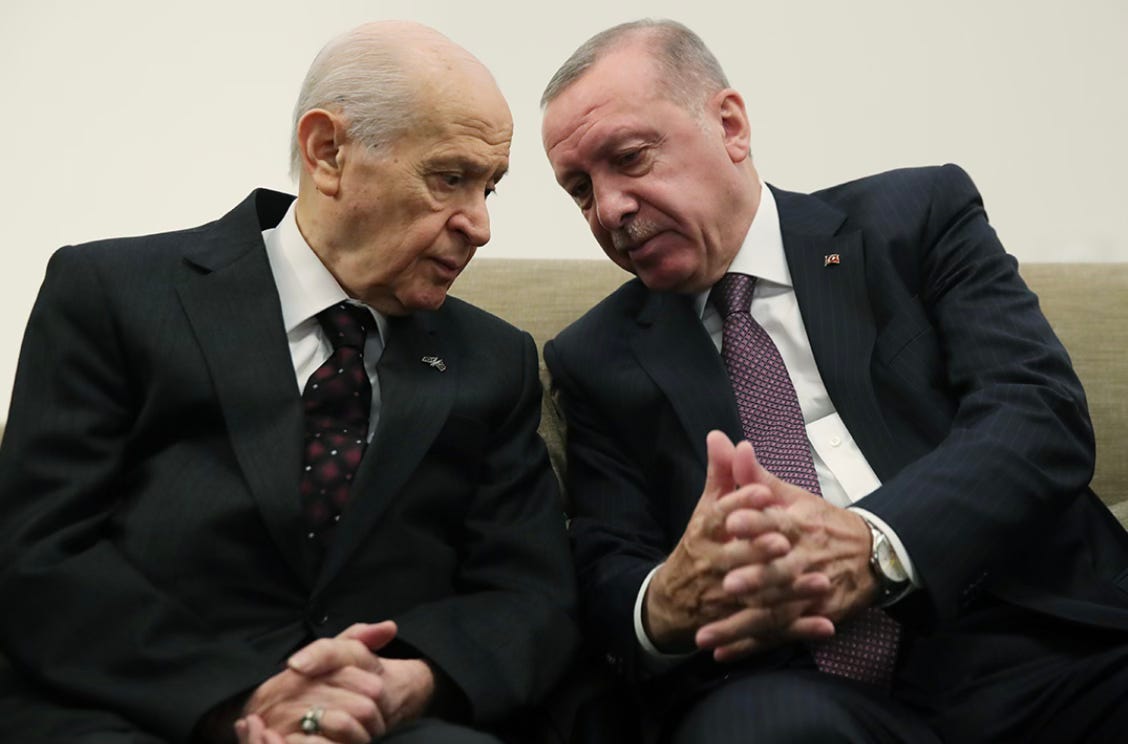
Initiated by Devlet Bahçeli, Erdoğan’s ultra-nationalist ally, under the slogan “terror-free Turkey,” the process has largely kept DEM occupied and diverted from Turkey’s burning issues, such as poverty and sky-high inflation. Its logic has never been hard to read: a win-lose arrangement disguised as reconciliation.
The CHP, meanwhile, has been kept on a razor’s edge for months, fractured from within, by acrimonious debates. The removal of Özel will reignite the party’s internal fault lines — between those who favour engagement and accommodation with the regime, and those committed to structural resistance.
The question of whether Kılıçdaroğlu, deeply discredited within the party, might be reinstated — or whether a regime-friendly trustee committee could be installed — now hangs openly over the party. A divided opposition fighting over its own leadership will not be fighting Erdoğan.
That is the major point.
Deposed Özel has two choices: he and his cadres can resist by entrenching themselves at party headquarters, or they can launch a new party. But, let us keep in mind that there are already files presented to Parliament about lifting the immunities of eight deputies, including Özel. There is also a court hearing scheduled in early July, about the fate of more than a dozen CHP figures, linked with Özel.
In the long term, here are the expected consequences of the massive political engineering, bearing Erdoğan’s signature:
CHP’s parliamentary group faces sharp internal divisions. The main opposition currently has 138 deputies. It has long been worn down by infighting between factions and interests. At least 25 of these deputies are believed to support Kılıçdaroğlu. Depending on how the situation develops, that number may rise — causing an irreversible split in Parliament. This division is part of Erdoğan’s plan, since he openly talks about reaching the critical threshold of 360 votes to declare early elections, which would give him the right to run for a new presidential term, and to trigger a referendum on constitutional amendments.
The 2028 election is structurally pre-decided. İmamoğlu is imprisoned and constitutionally barred. Özel is now judicially removed. The opposition enters the next presidential cycle without coherent leadership, a unified platform, or a legally protected organisational structure.
A trustee scenario for the CHP itself cannot be excluded. If the annulment leads to a protracted leadership vacuum, the regime has both the legal pretext and the institutional tools to push for administered management of the party — as it has already done with the CHP’s Istanbul branch.
For Kurdish politics, the DEM gamble may leave the movement politically spent. If the peace process collapses without binding legal guarantees — as every previous Turkish-Kurdish negotiation has — DEM will have neutralised itself as a democratic opposition force in exchange for nothing.
Markets will continue to price in political risk. The recurring selloff pattern shows that investors understand what analysts sometimes hesitate to say openly: judicial removal of opposition leaders is not legal normalisation — it is institutionalised instability.
Internationally, the response will be inadequate. Turkey’s NATO membership and the permanent fiction of EU candidacy will continue to insulate the regime from meaningful Western pressure. Strategic calculations about migration, defence, and regional stability will, as always, trump democratic principle.
A closed autocracy does not announce itself. It arrives gradually, dressed in court orders and the exhaustion of those who once resisted. Turkey’s main opposition has seen more than 20 of its mayors arrested, its Istanbul branch decapitated, and now its congress annulled, all within fourteen months.
The circuit is now complete.
I have been arguing persistently for over a decade that President Erdoğan, backed by his ally Bahçeli, is pushing Turkey toward “Azerbaijanisation”: a system in which the opposition remains dwarfed and impotent, the judiciary is instrumentalised by the autocratic rule, the media is turned into a machinery of sheer propaganda and most importantly, elections will serve as legitimization of the regime and its leadership.
Regardless of how you subscribe, I thank you for reading.