
A Disputed, Divisive, Conditional “Amnesty Law” for the PKK: Much Ado About What?
Shaped by Erdoğan, Bahçeli and Öcalan, the law opens a wider debate on Turkey’s future — peace gesture or further regime consolidation?

Turkey’s chronic “system crisis,” spanning over a decade and pushing the country deeper into hard‑core autocratic rule, has reached a notable phase with a new law on PKK disarmament — covering the group and its branches — that offers conditional amnesty to members and those labelled sympathisers.
Initiated in October 2024 as the “Terror‑Free Turkey” process by Devlet Bahçeli, Erdoğan’s political ally and leader of the ultra‑nationalist MHP, the 12‑article law is its end‑product.
Judging by reactions from all parties and observers, it appears dictated entirely by the ruling bloc, lacking the hallmarks of genuine conflict resolution seen elsewhere.
Sui generis, it reads as a “win‑lose” arrangement rather than a “win‑win.”
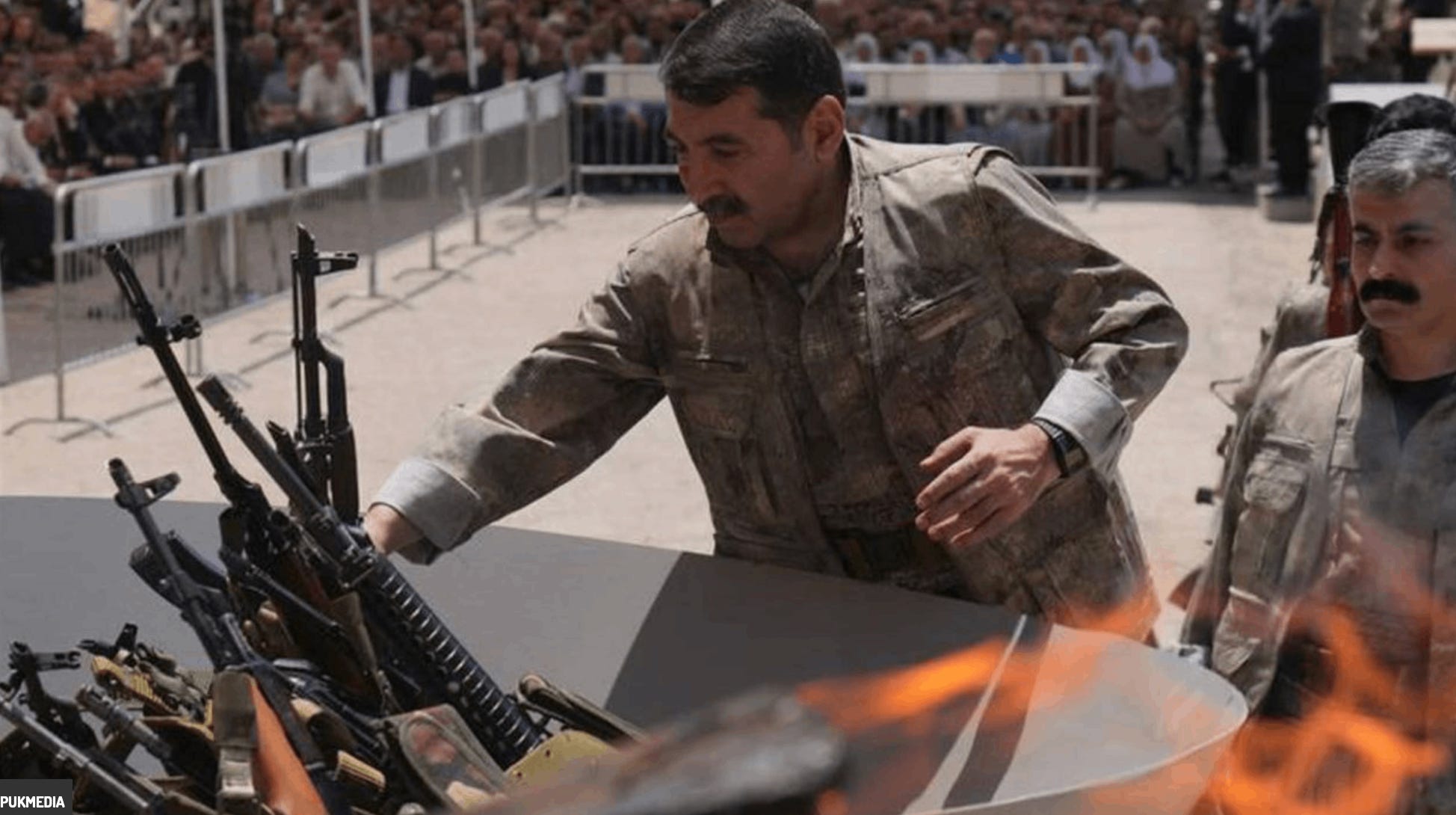
While defining the PKK as a “terror organisation,” the text never mentions the “Kurdish problem.” It creates a narrow, tightly managed path from insurgency to civilian life, yet its multi‑layered conditions, selective scope and heavy securitisation leave its long‑term peace potential uncertain.
The law offers demobilisation incentives while preserving broad state discretion and excluding the conflict’s central political and symbolic figures — among them Selahattin Demirtaş, former leader of the pro‑Kurdish HDP (predecessor of today’s DEM Party), imprisoned for nearly a decade despite a European Court of Human Rights (ECtHR) ruling for his release.
Nor does it mention any pardon for Abdullah Öcalan, the PKK’s jailed leader, even though the ECtHR has ruled in his favour under its “right to hope” jurisprudence.
Legally — and to the protest of independent legal experts in the country — the bill grants no classic, irreversible amnesty. Instead, it suspends prosecutions and prison sentences for certain PKK‑related offences for five to ten years; cases are dropped and sentences deemed served if no new terror‑related crime occurs in that period.
Covered offences include membership, aiding and abetting, propaganda and financing. Intentional killings, aggravated life sentences predating 2005, and senior leadership roles are excluded — explicitly leaving Öcalan and other top commanders, most based in Iraq’s Qandil mountains, outside its scope.
Implementation is strictly tied to security benchmarks: the law takes effect only once the National Security Council certifies the PKK’s full disarmament; those wishing to benefit then have six months to apply, with a monitoring board and a 17‑member parliamentary board overseeing surrender and reintegration.
Estimates suggest roughly 3,500 PKK‑linked detainees — about a third of such prisoners — could eventually see sentences suspended and gain a path to civilian life. The law also extends to parts of the broader network, including the Kurdistan Communities Union (KCK), aiming to channel cadres from Turkey, northern Iraq and Syria into legal political and social activity under close monitoring.
By design, however, it leaves untouched large segments of political prisoners convicted under expansive anti‑terror laws, along with the organisation’s historical leadership and pre‑2005 cases — reinforcing its character as a partial, conditional amnesty.
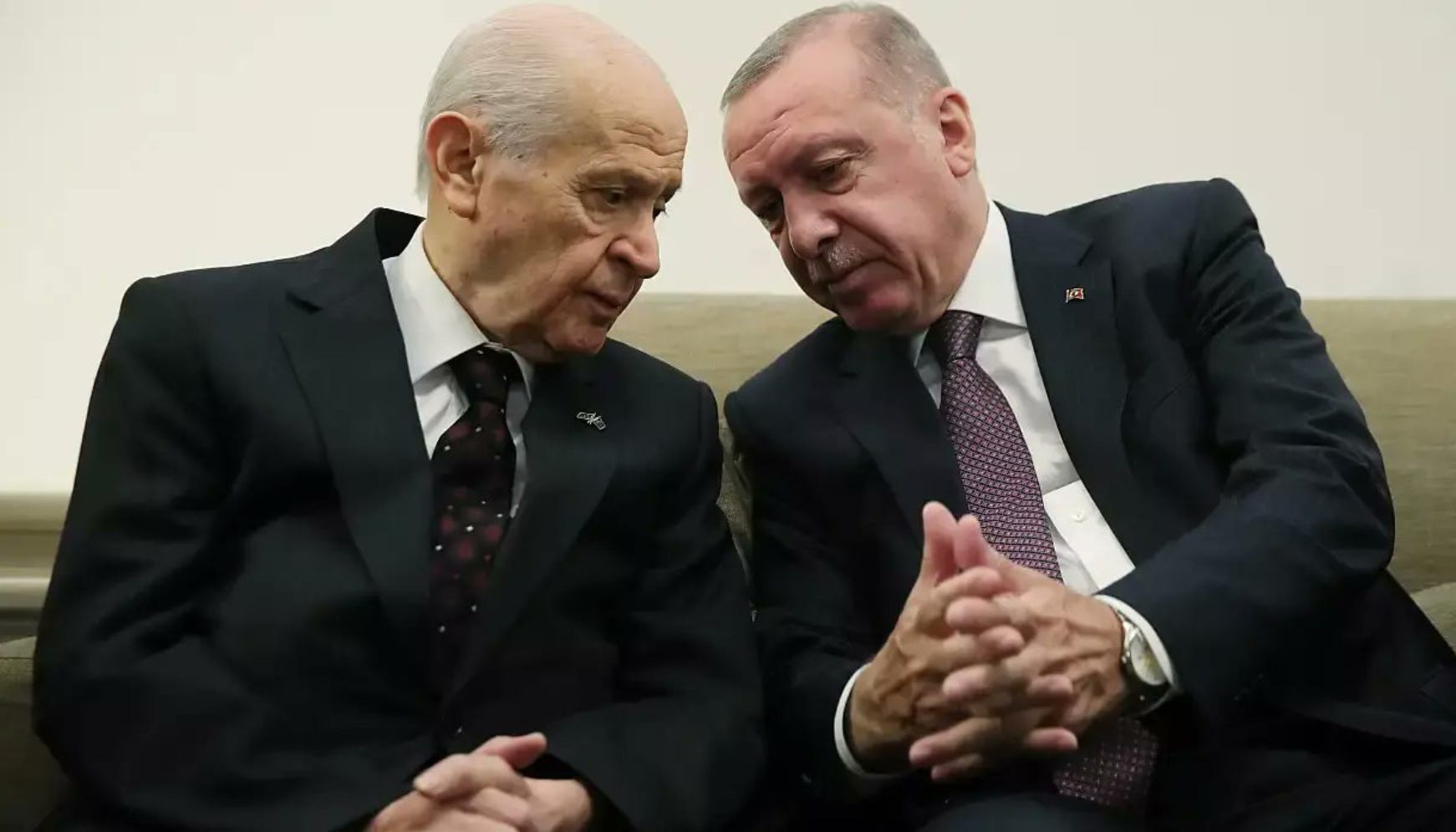
Amid deepening political and economic crisis, this ambiguous, opaque move has inevitably deepened divisions and fed suspicions that it will serve as a tool for consolidating the ruling bloc’s power — Erdoğan’s AKP and Bahçeli’s MHP.
As expected, debate has pitted Öcalan’s followers, the DEM Party and Turkish supporters of the process against sceptical independent legal experts and pundits, while also drawing renewed resistance from hard‑core Turkish nationalists.
Simplified, three camps have emerged: a vocal “yes” bloc, a nationalist “no” bloc, and a smaller sceptical media contingent arguing the move amounts to political engineering on a grand scale.
Supporters inside and outside government, often invoking the word “peace,” argue the law creates a concrete incentive for fighters and sympathisers to lay down arms, easing overcrowded prisons without altering Öcalan’s status as a lifetime prisoner.
For Ankara, this “framework law,” as it is often called, allows the state to end a costly conflict, improve its international image, and partially de‑internationalise the issue — especially in Iraq and Syria — without conceding on sovereignty or rewriting anti‑terror legislation. It includes no mention, reference, or pledge addressing the decades‑long demand for Kurdish political and cultural rights.
Kurdish critics focus mainly on this point: Öcalan and DEM face fierce criticism for reportedly abandoning a four‑decade struggle for constitutionally guaranteed rights in exchange for disarmament. Many also object that the “deal” has nothing to do with democratising Turkey, and that neither Öcalan nor his followers can claim to represent all of Turkey’s roughly 15–20 million Kurds, around a fifth of the population.
“This is a deal between the state and the PKK, nothing more” became a widely shared phrase across social media, alongside terms like “unconditional surrender” or even a cynical “euthanasia deal.”
Mainstream independent analysts, meanwhile, call the law “selective” and “limited” — a technical deferral mechanism rather than genuine political amnesty — and argue it conflicts with the constitutional principle of equal rights.
For context, DEM Party deputy and human‑rights advocate Ömer Faruk Gergerlioğlu puts the number of political prisoners in Turkey at “at least” 30,000, roughly a third linked to PKK cases and the rest a mix of Gülenists, many civil‑society figures such as Osman Kavala, and various leftist dissidents.
Independent legal experts also stress that the law entrenches the primacy of the security apparatus: National Security Council (MGK) certification, broad discretion held by two commissions of politicians and bureaucrats, and reversible sentence suspensions keep beneficiaries politically constrained for years.
From this view, the law risks co‑opting parts of the movement while neutralising its armed wing, without addressing structural issues such as sweeping terror prosecutions, language and cultural rights, local self‑government, or accountability for state abuses.
Domestically, the conditional amnesty is likely to strengthen Ankara’s ability to fragment and manage —-divide and rule—the Kurdish political landscape, while keeping the leadership question and broader constitutional demands under firm presidential control.
Its effects may extend beyond neutralising the Kurdish opposition. The process unfolded in parallel with the “legal bulldozing” of the main opposition CHP, which split as the bill took shape, giving rise to the New Party (Yeni Parti), led by Özgür Özel after his removal as CHP chairman by a court ruling. Challenged by the state and internally divided, the new party faces an uncertain path ahead.
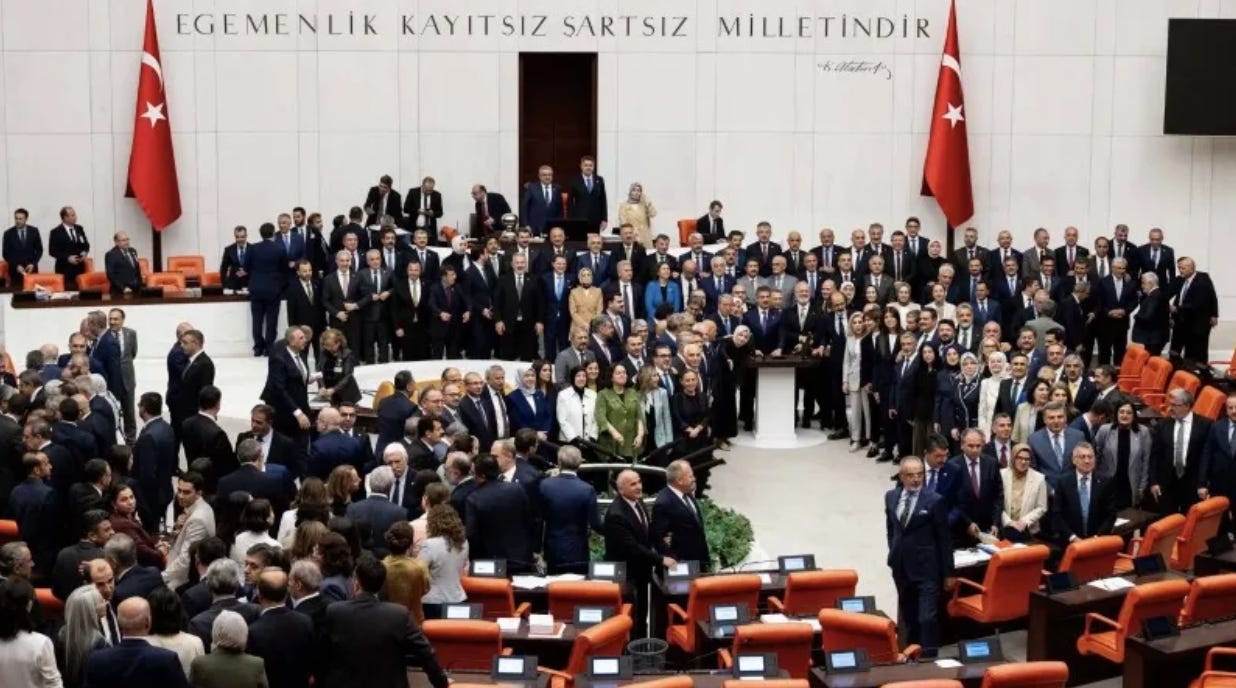
The bill’s overwhelming passage — 468 votes in favour, 88 against, six abstentions — suggests Erdoğan has again succeeded in a wide‑ranging political manoeuvre: drawing the pro‑Kurdish DEM Party closer to the ruling bloc while dividing the main opposition, securing a path toward another election victory.
Pessimists argue the “partial amnesty law” should be read as a tool for cementing power rather than delivering “peace”, let alone political reform.
Put more mildly: whether the law becomes a stepping stone to deeper democratisation, or consolidates an “authoritarian peace” built on selective leniency and continued control, will depend on subsequent legislation, implementation practices, and the evolution of Kurdish political strategy in the post‑insurgency period.
Regardless of how you subscribe, I thank you for reading.